





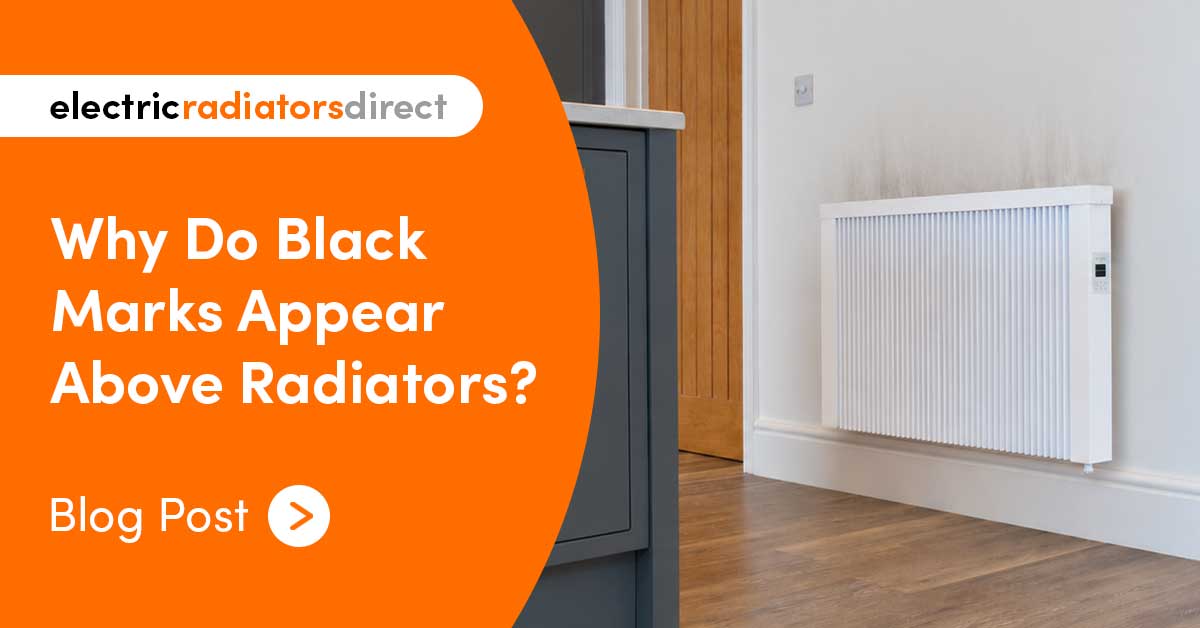
Noticed grey streaks or dark patches above your radiator? It’s understandable to wonder whether your heating is damaging the wall, especially if you’ve only recently decorated.
One possible explanation is thermal tracking: a build-up of airborne dust and soot that collect on the wall as warm air rises. Here’s what causes it, how to help prevent it and when to ask for advice.
What is thermal tracking?
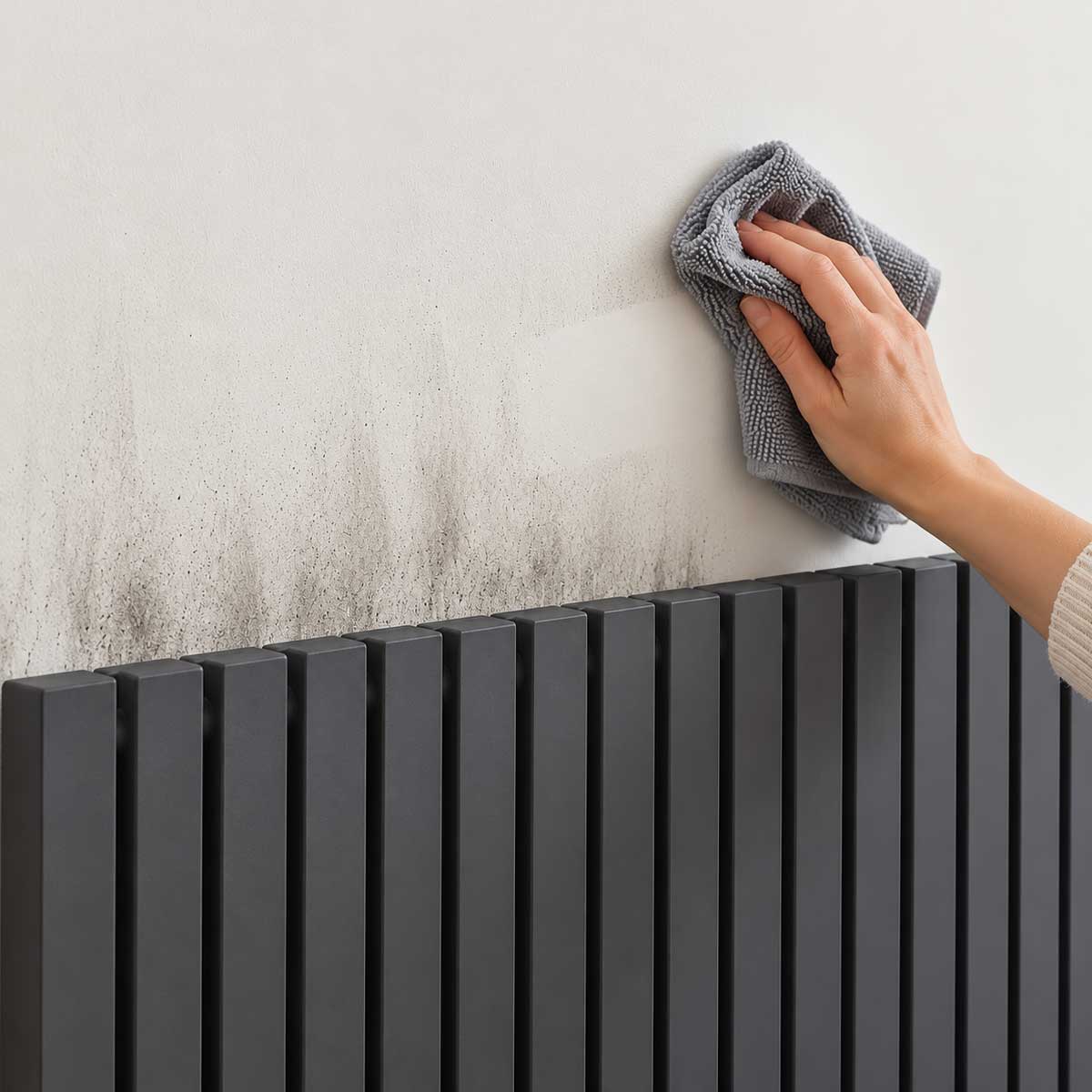
Thermal tracking, sometimes called ‘ghosting’, describes dark deposits that build up on walls or other surfaces. Around a radiator, these may appear as grey shading or black streaks above or behind the heater.
As a radiator warms the surrounding air, that air rises and can carry fine particles with it. Some of those particles collect on cooler wall surfaces, gradually leaving a visible mark.
Thermal tracking doesn’t automatically mean your radiator is faulty. Electric radiators don’t burn fuel to generate heat, so they don’t produce combustion soot during normal operation. With thermal tracking, the particles are already present in the surrounding environment.
The pattern and extent of any marks can vary with the heater’s design, its installation and the conditions in the room.
Why do black marks appear above radiators?
Several factors can contribute, and more than one may be involved.
Airborne dust and soot
Everyday household dust can collect on your radiator and circulate around the room. Candles, incense, cigarette smoke, cooking and wood-burning stoves can also introduce fine particles into the air.
You won’t necessarily see these particles as they move around. Over time, though, deposits can become noticeable against a pale wall. This can happen even in a regularly cleaned home.
Moisture and cooler walls
Damp conditions and condensation can make staining more noticeable. Condensation forms when moisture in the air meets a sufficiently cold surface, and persistent moisture can also encourage mould.
Mould and thermal tracking need different treatment, although both may be present in the same area. Don’t assume every black patch above a radiator is simply dust.
Draughts and ventilation
Draughts can affect how particles travel around a heater, while inadequate ventilation allows moisture and indoor pollutants to build up.
Heating may reveal an existing issue with the room’s conditions, which will also need attention if the marks are to stay away.
How can you help prevent black marks?
Reducing the amount of dust and soot in the room is a useful starting point. If condensation or damp is involved, cleaning alone won’t resolve the underlying cause.


Clean the radiator and room regularly
Include your radiator in your usual cleaning routine. Dust nearby surfaces and vacuum floors, skirting boards and accessible areas around the heater to reduce particle build-up.
Check the radiator before the heating season starts, particularly if it’s gathered dust while switched off over summer.
Reduce sources of soot
If you regularly burn candles or incense, reducing their use may help limit airborne deposits. Use suitable kitchen extraction when cooking, too.
Moving a candle away from the radiator won’t necessarily solve the issue, as fine particles can circulate throughout the room.
Manage condensation and unwanted draughts
Use extractor fans when cooking, bathing or showering, and keep background ventilation, such as trickle vents, open and unobstructed. Avoid drying clothes directly on an electric heater.
Address unwanted draughts around doors and windows where appropriate, but don’t block purpose-built ventilation. If walls remain damp or condensation keeps returning, seek advice on the cause. Leaks, cold surfaces and ventilation problems may need attention beyond everyday cleaning.
How should you clean an electric radiator?
Cleaning your electric radiator should be straightforward, but its product manual always takes priority. Different finishes and designs may have different care requirements.
- Switch off and disconnect the power. Unplug a plug-in radiator before cleaning. For a hardwired model, follow the manufacturer’s instructions for safely isolating the electricity supply. Switching to standby isn’t the same as disconnecting the power.
- Let it cool completely. Wait until the radiator is fully cool before touching or cleaning its surfaces.
- Remove loose dust gently. Use a soft, dry cloth. Where the manual permits, a soft brush or vacuum attachment can help with accessible exterior areas. Don’t dismantle the heater or push tools into its openings.
- Wipe the exterior with a soft, lightly dampened cloth. Use water or a suitable pH-neutral cleaning product, as permitted by the manual. Apply any cleaner to the cloth, never directly onto the heater.
- Keep moisture away from electrical parts. Don’t allow liquid into controls, vents, connections or other electrical components. Avoid soaking the surface, abrasive pads and harsh cleaning products.
- Allow it to dry before restoring power. Check that the exterior is dry and follow any further instructions in the manual.
For more general care advice, read our guide to electric radiator maintenance.
What if the marks are already on the wall?
Before reaching for a cleaning product, check what’s suitable for your paint or wallpaper. Some finishes are washable; others can lose colour or become damaged when rubbed.
For suspected dust or soot deposits, follow the wall covering or paint manufacturer’s cleaning guidance and test any method on an inconspicuous area first. Avoid aggressive scrubbing, which can spread staining or damage the finish.
If marks are stubborn, ask a decorator about suitable cleaning, surface preparation and any stain-blocking treatment needed before repainting. The right approach depends on the wall’s condition and finish.
Deal with the cause before redecorating
Painting over deposits without addressing persistent moisture or airborne particles can allow the problem to return. Moving or replacing the radiator alone may also leave the underlying issue unresolved.
If you suspect mould or the wall feels persistently damp, seek appropriate professional advice rather than treating it as ordinary surface dust. If you rent, report the issue to your landlord.
When should you contact Customer Support?
Get in touch if you’re unsure what’s causing the marks, they’re developing quickly, or they keep returning despite cleaning and addressing room conditions.
If you notice scorching, melting, a persistent burning smell or other signs of damage, stop using the heater. Isolate the power only if it’s safe to do so, and contact Customer Support or a qualified electrician before using it again. These signs shouldn’t be dismissed as thermal tracking.
When contacting Customer Support, include:
- Your radiator’s model and order details, if available.
- Clear photographs of the marks and the wider installation.
- When you first noticed the issue and whether it’s getting worse.
- Details of any unusual smells, visible damage or damp nearby.
Contact our Customer Support team for help with your existing heater. If you’re planning new heating, our team can also help you choose from our electric radiator range and understand the installation and care requirements before you buy.
Key learnings
✓ Black marks can result from airborne dust and soot settling on cooler walls above a radiator, without necessarily indicating a heater fault.
✓ Regular cleaning of your heater and room, reducing soot sources and managing condensation can help prevent repeat staining.
✓ Always disconnect your electric radiator from the power and let it cool fully before cleaning, following its product manual.
✓ Use a soft cloth lightly dampened with water or a permitted pH-neutral cleaner. Never spray liquids directly onto the heater.
✓ Clean wall marks using a method suitable for the finish, and address the underlying cause before repainting.
✓ Suspected mould or persistent damp needs investigation. Stop using the heater and contact support if you notice scorching, melting or persistent burning smells.

